


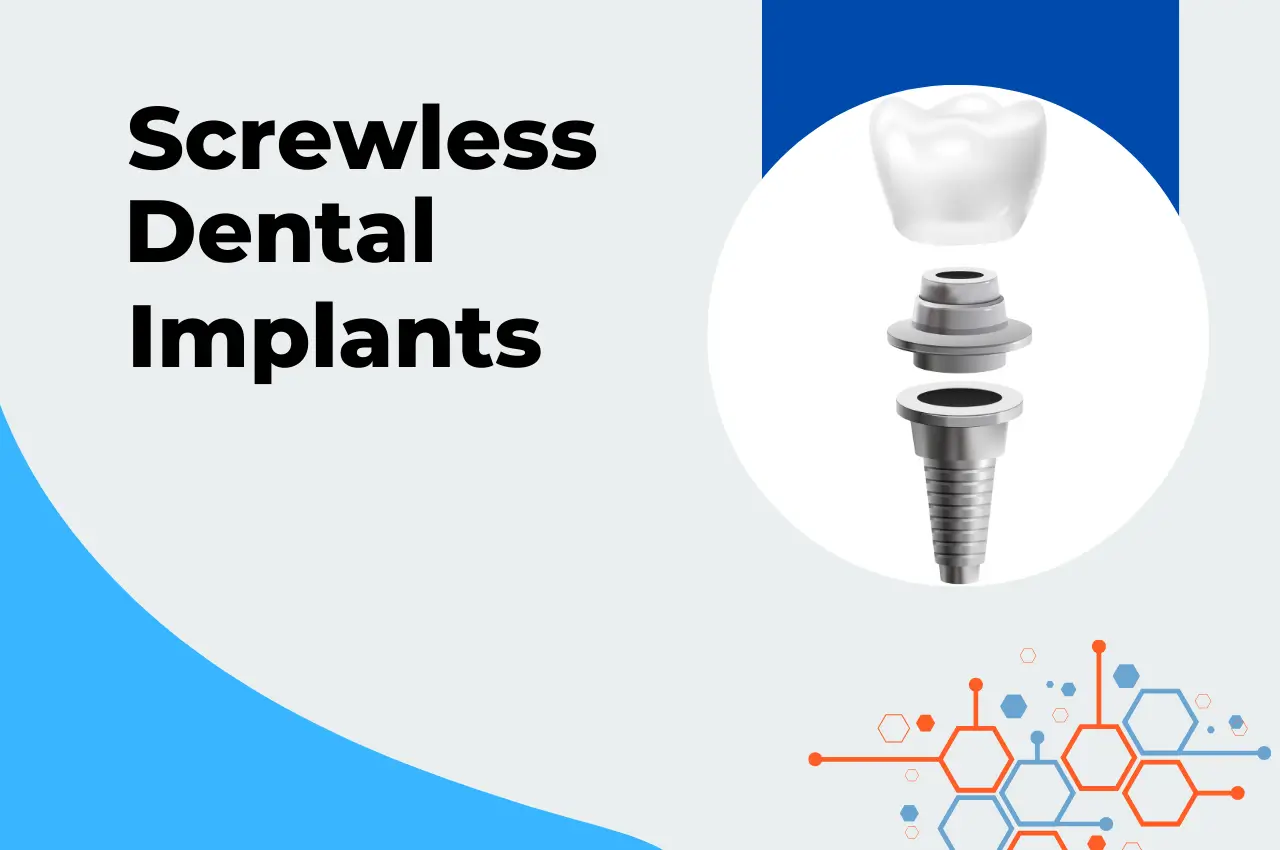
The landscape of restorative dentistry is undergoing a profound transformation, moving away from traditional mechanical fixations toward more biologically integrated solutions. For decades, the gold standard for replacing missing teeth involved screw-retained systems, which, while effective, often presented challenges such as screw loosening, bacterial accumulation in micro-gaps, and aesthetic compromises. Today, the emergence of screwless dental implants—often referred to as “locking taper” or “Morse taper” systems—offers a revolutionary alternative that mimics the natural connection between a tooth and the jawbone more closely than ever before.
As these technological advancements continue to redefine patient experiences, many individuals are looking beyond their local borders for expert care. Choosing a dental implant in Turkey has become a premier choice for those seeking the perfect balance between cutting-edge screwless technology and world-class surgical expertise. Turkish dental centers have stayed at the forefront of this shift, integrating these high-tech, cement-free, and screw-free systems to provide patients with more durable, hygienic, and aesthetically pleasing results at a fraction of the cost found in Western Europe or North America.
What Are Screwless Dental Implants?

Screwless dental implants are a specialized type of dental prosthetic system that eliminates the need for the small internal screws typically used to connect the implant post to the prosthetic crown or abutment. In a traditional setup, a screw holds these components together; however, in a screwless system, the connection is achieved through a high-precision, friction-fit mechanism known as a Locking Taper or Morse Taper.
This design was pioneered to address the “weakest link” in implant dentistry: the screw itself. Because there is no screw hole on the biting surface of the crown, the result is a much stronger, solid restoration that looks and feels like a natural tooth. These implants are often shorter and wider than traditional ones, making them a versatile choice for various jawbone structures.
How Do Screwless Dental Implants Work?
The functionality of a screwless dental implant relies on the principles of mechanical friction and cold welding. Instead of being “bolted” together, the abutment (the piece that holds the tooth) is tapped into the implant (the part in the bone).
When the tapered post of the abutment is seated into the matching tapered well of the implant, the two metal surfaces engage so tightly that they create a hermetic seal. This “cold weld” connection is incredibly stable. Because the fit is so precise (often within microns), there is no space for the components to move or for bacteria to enter, which is a common issue with traditional screw-integrated systems.
How Is Stability Achieved Without Screws?
The secret to stability in screwless systems lies in the geometry of the connection. Most screwless systems utilize a $1.5^{\circ}$ Morse taper. This specific angle creates a “locking” effect where the friction between the two surfaces exceeds the forces attempting to pull them apart.
Furthermore, the design often features a hemispherical base. This shape allows for a $360^{\circ}$ positioning of the abutment, giving the dentist total freedom to rotate the crown to the perfect angle for the patient’s bite and smile line. Once tapped into place, the atmospheric pressure and the friction of the tapered surfaces provide a degree of stability that traditional screws—which can vibrate loose over time due to the constant pressure of chewing—simply cannot match.
Differences Between Screwless and Traditional Dental Implants

Understanding the differences is crucial for any patient deciding on a treatment plan. Here is a breakdown of how they compare:
- Connection Type: Traditional implants use a screw to connect the crown to the implant. Screwless implants use a locking taper (friction fit).
- Bacterial Risk: Traditional implants have a “micro-gap” between the implant and abutment where bacteria can thrive, potentially leading to bone loss. Screwless designs create a bacterial seal.
- Maintenance: Screws can strip, break, or loosen over time, requiring dental visits for tightening. Screwless systems are solid-state and do not “loosen” in the traditional sense.
- Aesthetics: Traditional crowns often have a visible access hole for the screw, which is filled with composite resin. Screwless crowns are completely solid, offering a more natural appearance.
Advantages of Screwless Dental Implants
The benefits of going screwless extend beyond just the lack of hardware.
- Reduced Infection Risk: By eliminating the micro-gap, screwless implants significantly reduce the risk of peri-implantitis, an inflammatory disease that can cause implant failure.
- Structural Integrity: Without a screw hole in the middle of the crown, the porcelain or ceramic is much less likely to chip or crack under the pressure of mastication (chewing).
- Bone Preservation: Many screwless systems are designed as “short implants.” Their unique design allows for better stress distribution to the bone, which can actually help preserve and even stimulate bone growth around the neck of the implant.
- Flexibility: The $360^{\circ}$ universal abutment positioning allows for much better prosthetic outcomes, especially in difficult areas of the mouth where space is limited.
Who Is a Good Candidate for Screwless Dental Implants?
Most people who are candidates for traditional implants will also be candidates for screwless versions. However, they are particularly beneficial for:
- Patients with limited bone height who wish to avoid invasive bone grafting or sinus lift procedures.
- Individuals looking for the highest level of aesthetics in the “smile zone” (front teeth).
- Patients who have experienced screw loosening or failures with traditional implants in the past.
- Those who prioritize long-term oral hygiene and want to minimize the risk of bacterial inflammation.
Screwless Dental Implants for Seniors: Is It the Best Option?
For senior patients, screwless dental implants are often the superior choice. As we age, jawbone density naturally decreases, and many seniors face significant bone resorption after years of missing teeth or wearing dentures.
Traditional implants usually require a certain length (often 10mm or more) to be stable, which frequently necessitates bone grafts for older patients. Screwless systems, particularly those like the Bicon system, are famous for their short implants (as short as 5mm or 6mm). These can be placed safely in shallow bone, avoiding the need for painful and expensive grafting surgeries. This makes the recovery process much faster and less taxing on the body, which is a vital consideration for senior health.
The Treatment Process of Screwless Dental Implants
The journey to a screwless smile involves several key stages:
- Consultation and Imaging: High-resolution 3D CT scans are taken to map the jawbone and nerve positions.
- Implant Placement: The titanium implant is placed into the jawbone. Because these are often shorter, the surgery is typically minimally invasive.
- Osseointegration: A healing period of 3 to 6 months is usually required for the bone to fuse with the implant surface.
- Abutment and Crown Placement: Once healed, the screwless abutment is “tapped” into the implant using a specialized tool. The permanent crown is then seated, often using a cementless technique or a direct locking mechanism.
How Long Do Screwless Dental Implants Last?
When properly maintained, screwless dental implants are designed to last a lifetime. Clinical studies on locking taper systems have shown success rates exceeding 98% over 20-year periods. Because there are no internal screws to fatigue or break, the mechanical failure rate is remarkably low. As long as the patient maintains good oral hygiene and attends regular dental checkups, the “cold weld” connection remains one of the most durable foundations in modern medicine.
How Much Do Screwless Dental Implants Cost?
The cost of screwless dental implants can vary significantly based on the brand used (such as Bicon or Leone), the complexity of the patient’s case, and the geographic location of the clinic. Generally, the initial cost of the hardware for screwless systems can be slightly higher than generic screw-retained implants due to the precision engineering required for the Morse taper fit. However, when you factor in the reduced need for bone grafts and the lack of future maintenance costs (like replacing broken screws), they are often more cost-effective in the long run.
For those looking to maximize their budget without compromising on quality, visiting a dental clinic in Turkey is a highly strategic move. Turkey has invested heavily in dental technology, and because of lower overhead costs, favorable exchange rates, and high competition, clinics there can offer premium screwless systems for much less than their European or American counterparts. Patients often find that they can receive a top-tier screwless implant, including the crown and the surgical procedure, for 50% to 70% less than the price in their home country, all while being treated by surgeons who perform these procedures hundreds of times a year.
The following table provides an estimated comparison of the average cost for a single screwless dental implant (including the abutment and crown) across various countries:
| Country | Estimated Cost (USD/EUR) |
| United States | $3,500 – $5,500 |
| United Kingdom | £2,500 – £4,000 |
| Germany | €2,000 – €3,500 |
| Belgium | €1,800 – €3,000 |
| Poland | €1,200 – €2,000 |
| Turkey | €600 – €1,200 |
Why Should You Choose Turkey for Screwless Dental Implants?
Turkey has emerged as a global leader in dental tourism by combining high-tech infrastructure with world-renowned surgical expertise. Patients choose Turkey not only for the significant cost savings but also for the access to the latest screwless technologies that are often unavailable or overpriced elsewhere. The country’s modern clinics ensure a seamless, high-quality experience for international patients seeking durable, infection-resistant, and aesthetic results.
At Point Clinic in Istanbul, we bring this global standard to life through our professional team of expert doctors specialized in screwless implantology. Our clinic is dedicated to providing precision-led treatments using the most advanced systems available today. By choosing Point Clinic, you are opting for a professional environment where patient care, advanced technology, and clinical excellence meet to create your perfect, lifelong smile.
