


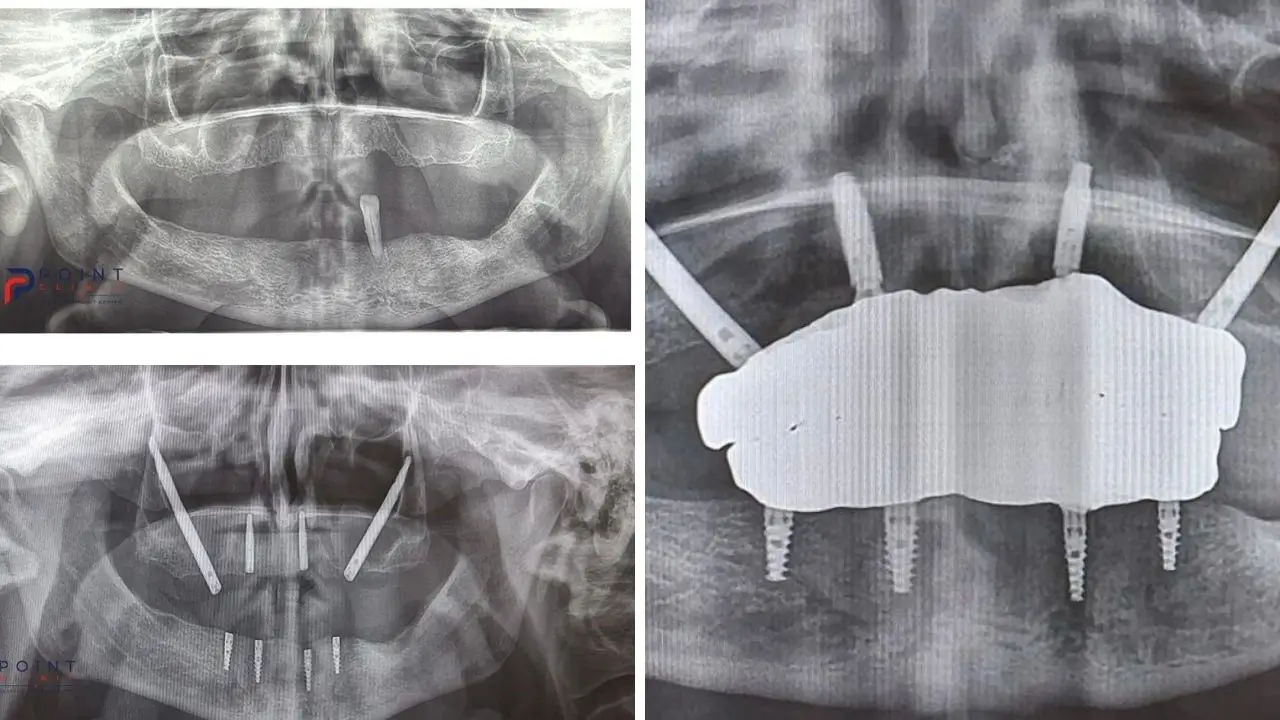
Eight years is a long time to live with removable dentures. Zenon, a 60-year-old from Poland, had reached his limit. He arrived at Point Dental Clinic in Istanbul with a single, uncompromising demand.
He wanted fixed teeth.
Like many patients who spend hours researching online, he walked through our doors with a specific package in mind. He expected a conventional All-on-6 treatment—twelve standard implants neatly divided between his upper and lower jaws. It sounds perfectly straightforward. But human anatomy rarely respects a standardized brochure.
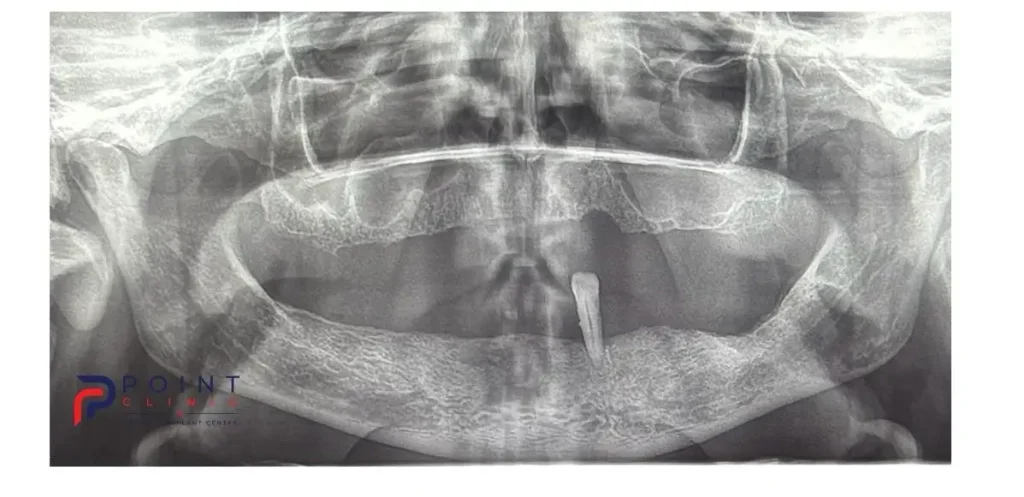
We ran the 3D CBCT scans. The lower jaw was fine, ready for standard implants. The upper jaw was a completely different story.
Severe bone loss had eroded his posterior and sinus regions. Trying to force six conventional implants into bone that simply wasn’t there is a recipe for failure. You don’t make a patient fit a product. You tailor the engineering to the foundation that actually exists.
We scrapped the original idea.
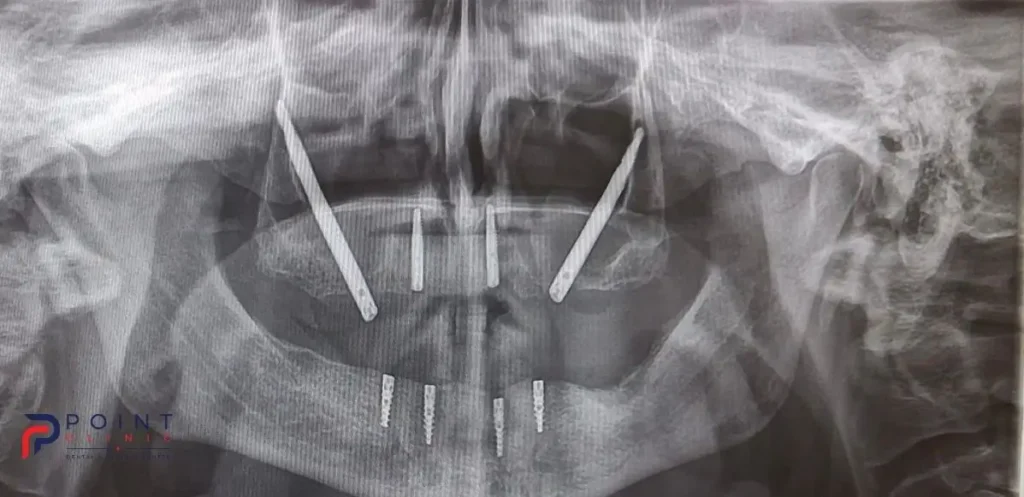
Instead of standard implants for his upper jaw, we pivoted to a much more advanced strategy: two zygomatic implants and two nasal implants. Zygomatic implants are entirely different beasts. Rather than relying on the shrunken alveolar bone where teeth used to sit, these much longer implants bypass the void and anchor directly into the cheekbone. They aren’t a magic wand for everyone, but when you are dealing with severe upper-jaw resorption, they can mean the difference between a removable plastic denture and permanent teeth.
Surgery took place in February 2026. We extracted one stubborn mobile tooth lingering in his lower jaw, placed the hybrid implant configuration, and fitted him with a temporary removable prosthesis. We always have to have a very frank conversation at this stage. Temporary teeth are for smiling at dinner parties and going to work. They are not for chewing steak or grinding your jaws in your sleep. Implants need absolute, undisturbed peace to integrate with the bone.
Fast forward six months. August 2026.
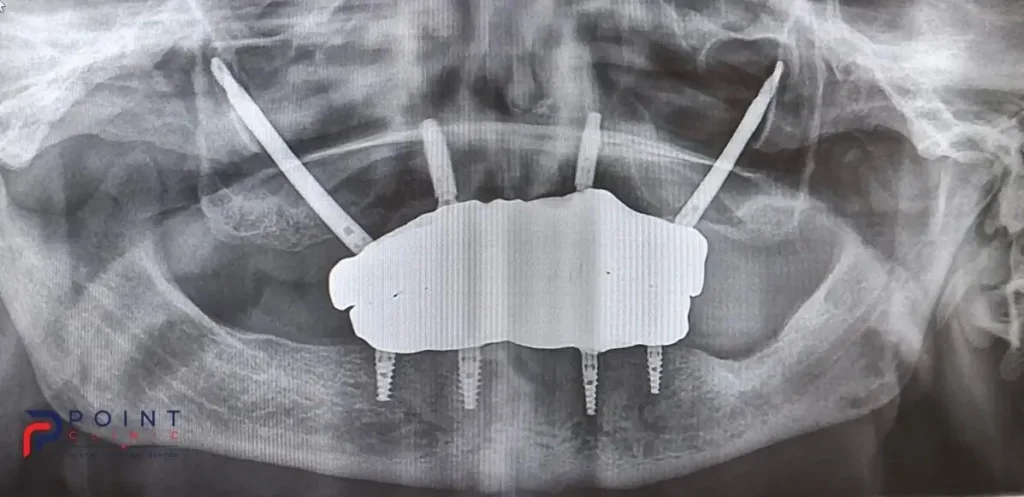
Zenon flew back for the final phase. The healing was textbook, allowing us to lock in his definitive restoration. We mounted a custom titanium bar supporting 24 gleaming zirconia teeth. The transformation wasn’t just cosmetic. He finally had the rigid, fixed bite he had been chasing for almost a decade.
Bone loss is incredibly frustrating, and jawbones naturally melt away over time when teeth go missing. If a local dentist told you that you lack the bone for conventional implants, they might be entirely right. But that doesn’t mean you are out of options.
Advanced cases just require a different map. Sinus augmentations, bone grafting, or zygomatic and nasal implants exist specifically for these roadblocks.
Don’t self-diagnose your way into a specific commercial package. If you have a recent panoramic X-ray lying around, send it over to our team in Istanbul. Let your actual anatomy dictate the plan.
